
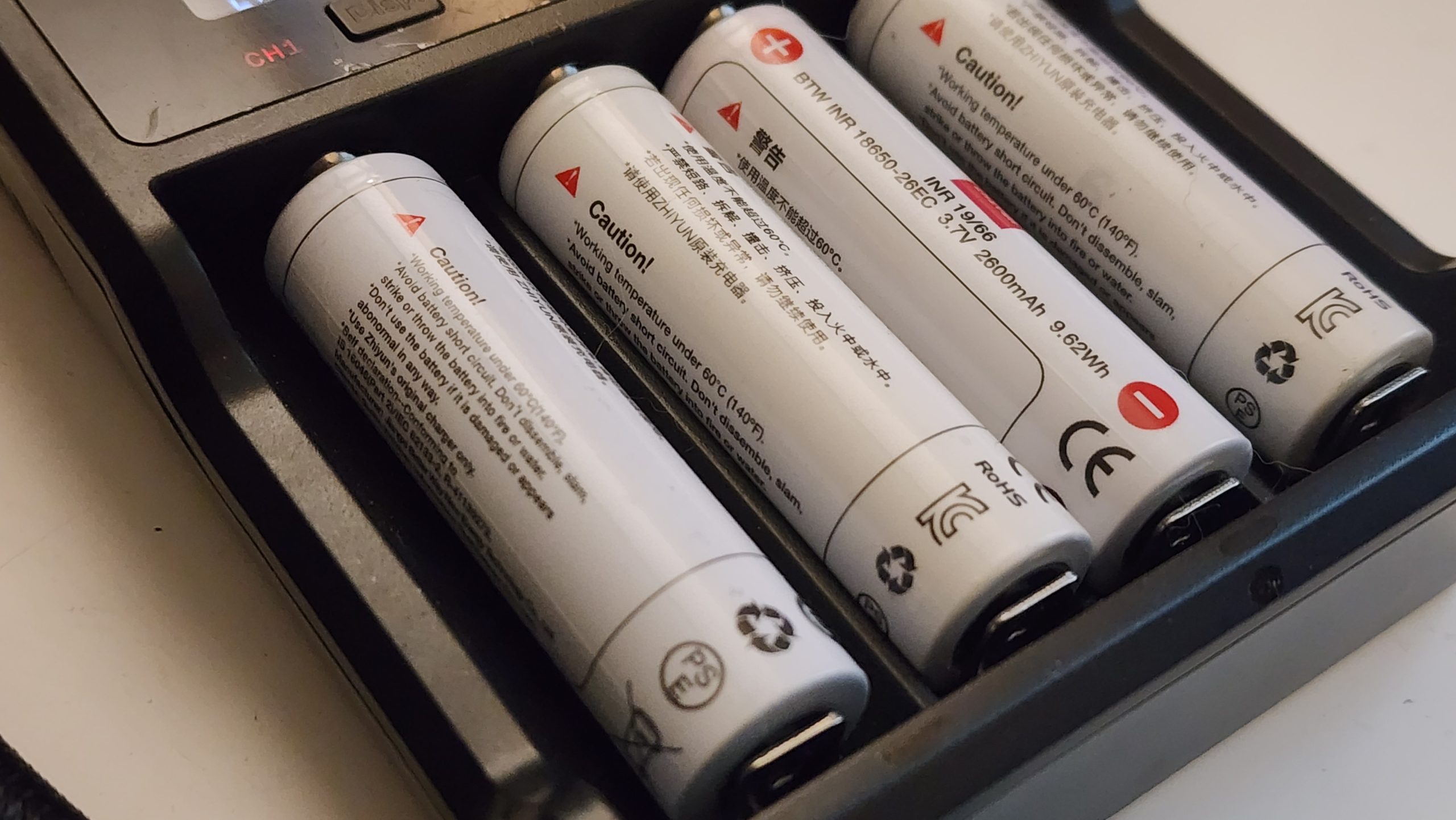
Lithium batteries have slipped so quietly into everyday life that most of us are completely used to them. They’re just there—inside the things we rely on, the things we carry, the things we ride. A decade ago, they were mostly confined to laptops and phones. Today, they power the way we move, work, and live.
Electric scooters hum down sidewalks, E-bikes flatten hills that used to be exhausting, electric skateboards glide effortlessly through city streets. Inside garages and closets battery packs sit charging in our drills, saws, leaf blowers, and backup power stations. The shift has been fast, and for the most part, it’s been overwhelmingly positive. These devices are convenient, efficient, and in many cases, genuinely transformative.
Unfortunately there is a quiet reality underneath all of this: lithium-ion batteries are not benign. They are dense, incredibly compact energy storage systems. When something goes wrong, they fail in ways that most of us are not ready to deal with. The danger with lithium batteries lies in the void between how to expect them to fail, and how catastrophically they can fail in reality.
The Comfort of Familiarity
Part of the problem is psychological. The more common something becomes, the less threatening it feels. People charge scooters in their living rooms, leave e-bikes plugged in overnight, stack spare batteries on wooden shelves in garages, or toss aging packs into drawers without a second thought. I’d be fairly confident in wagering that most of us are guilty of something similar. Nothing happens—until something does.
And when it does, it often feels sudden and disproportionate. A small device becomes a large fire. A quiet charge cycle turns into smoke, then flame, then something much harder to control. It’s not that lithium batteries are constantly on the verge of failure—they aren’t. But the margin between normal operation and catastrophic failure can be thinner than most people realize, especially as these batteries age or are used outside of their ideal conditions.
To understand why, you have to zoom in—past the device, past the casing, down to the level of the battery cell itself.
Inside the Battery: Where Stability Is Temporary
At a glance, a lithium-ion battery seems simple: you charge it, you use it, you repeat. But internally, it’s a tightly balanced chemical system that only works because several fragile conditions are being maintained at once.
Each cell contains two electrodes separated by a thin barrier and filled with an electrolyte that allows lithium ions to shuttle back and forth. That movement is what stores and releases energy. As long as ions move where they’re supposed to, the system behaves predictably.
But the key detail is this: that stability is not permanent.
Every charge and discharge cycle changes the battery slightly. Over time, those changes accumulate.
- The protective layer inside the battery slowly thickens.
- This layer—formed naturally during early use—helps stabilize the battery by separating anode from cathode, while still allowing lithium ions to pass through
- The battery becomes less efficient at moving energy.
- As charge cycles increase on our batteries, resistance increases. More energy is lost as heat during both charging and discharging, even under normal use.
- Microscopic damage builds inside the cell.
- In extreme charging or discharging scenarios, such as high discharge at high temperate, or charging in sub freezing temperatures, small needle like metallic lithium crystals called dendrites can grow on this crucial separation layer.
- Dendrites grow on the anode toward the cathode as a result of uneven lithium plating, which increases the heat during use, which increases the damage. It’s a feedback loop that is getting worse with every charge. In certain scenarios you might be able to spot this early: battery not charging to full, discharging prematurely, unusual behavior while in use.
It’s important to pay attention and know these signs. Nothing so far is extremely dramatic on it’s own, but when dendrite formation has pierced the middle layer, it’s too late. You’ll see things like bulging batteries, liquid near the battery, you might smell strange odors, or in extreme cases, you might see popping or smoking, hear a faint hissing noise. During this time, catastrophic failure is immanent.
The Moment Everything Accelerates: Thermal Runaway
When lithium batteries fail catastrophically, they usually do so through a process called thermal runaway. It sounds technical, but the idea is simple: heat triggers reactions that create more heat, and the system spirals out of control. What makes thermal runaway dangerous isn’t just that it produces fire—it’s how quickly it escalates and how little external input it needs once it begins. It often starts as a small localized failure, a short circuit inside a cell, or even a tiny puncture if the battery has sustained damage. They generate extreme localized area of heat as the batteries chemistry rapidly degrades. These localizations can be so small that we don’t even notice them. Maybe a minute, hour, day, it’s impossible to say when but when the internal materials breakdown like this the separator between anode and cathode will ultimately melt, or shrink, allowing direct contact between electrodes. A short circuit like this generates rapid heat that’s nearly impossible to contain. Flammable components will eventually combust and can catch electrolytes on fire, which create extremely toxic gas which violently vents from these battery cells. Up to 100 liters of toxic gas venting nearly instantly from the metal battery casing creates enough heat to rapidly breakdown nearby cells in the pack. Thermal runaway has begun.
Once this process crosses a certain threshold, it becomes self-sustaining. Even removing the external power source won’t stop it. In battery packs, like those in scooters or e-bikes, the heat from one failing cell can trigger adjacent cells, leading to a cascading failure. This failure can manifest as a series of short, almost controlled bursts, catastrophic explosion or any measure of reaction in-between. Your battery pack might fizzle and smoke for an hour or so, or it might ignite so suddenly that the pressure release from the cells shakes the windows of your house and throws metal casings across the street.
Why Rideables and Tools Change the Equation

Not all lithium batteries are equal in terms of risk. The ones inside phones and small electronics are relatively low-capacity and heavily protected. But the batteries used in e-scooters, unicycles, cars, or even power tools operate on a different scale. They store significantly more energy, and they’re often used in more extreme conditions. Charging outside overnight, intense periods of heavy usage, vibrations, impacts, ect.
Simply put – a larger battery pack means there are more battery cells close together, and cells in larger packs tend to be subject to heavier use. This inherently increases the chance that one of them fails and is the ultimate source of thermal runaway within a battery pack.
A scooter hitting a curb or dropping a battery powered drill might not seem like a huge deal initially, but internal damage can occur.
Reducing Risk Without Overreacting
The goal here isn’t to treat every battery like it’s about to explode. It’s to understand where the real risks are and adjust behavior in ways that meaningfully reduce them. The NUMBER ONE thing you can do to reduce the risk of a battery fire is to always use the stock charger. In recent studies, after-market or 3rd party chargers accounted for almost 40% of household fires caused by batteries. Fast chargers are a huge convenience, but should really only be used as a last resort. Don’t use them every day, consider them if you’re out riding and need that extra few amp hours to get home safely. Other important things to remember:
- Charging location matters more than most people think.
- A battery charging on a hard, non-flammable surface with space around it is far less likely to cause secondary damage if something goes wrong than one charging on a couch, near curtains, or in a cluttered corner of the garage.
- Heat is an early warning signal, not a minor annoyance.
- If a battery is getting noticeably hot during charging or use—beyond what’s typical—that’s a sign something internally has changed, and continuing to use it increases risk.
- Time changes the equation.
- Older batteries aren’t just less capable; they’re statistically more likely to fail in unpredictable ways. Replacing heavily used packs before they reach that point is a form of risk management, not just performance optimization. A pack that’s seen average use for 5 years straight might have just as much of a lithium plating issue as a pack that’s been used heavily just a couple hundred times. Just like all things, packs will eventually need to be replaced.
- Charging overnight or unattended adds exposure, not convenience.
- Most failures happen during charging. Ultimately, being nearby doesn’t prevent failure, but it does mean you can respond earlier if something starts to go wrong, and you’re awake to take action.
Charging with a plan can help
- Always try to supervise batteries on the charger.
- No, that doesn’t mean watch them charge in dead silence with 9-1-1 on speed-dial. But try to be around and aware of the fact that a battery is charging nearby. You’ll be infinitely more prepared to spot warning signs like smoke, hissing, popping, odd charging behavior or anything else that could happen. Maybe your cat knocks a lamp onto the batteries charger.
- Designate a consistent spot where charging will occur.
- If you must charge in the house, pick a spot away from anything flamable, 3-5 feet minimum. Make sure other members of your household know and expect there to be a battery charging there. Big batteries can take an entire day to charge, there’s nothing wrong with unplugging the charger if you need to go run some errands. A battery on the charger is much more dangerous than one that isn’t.
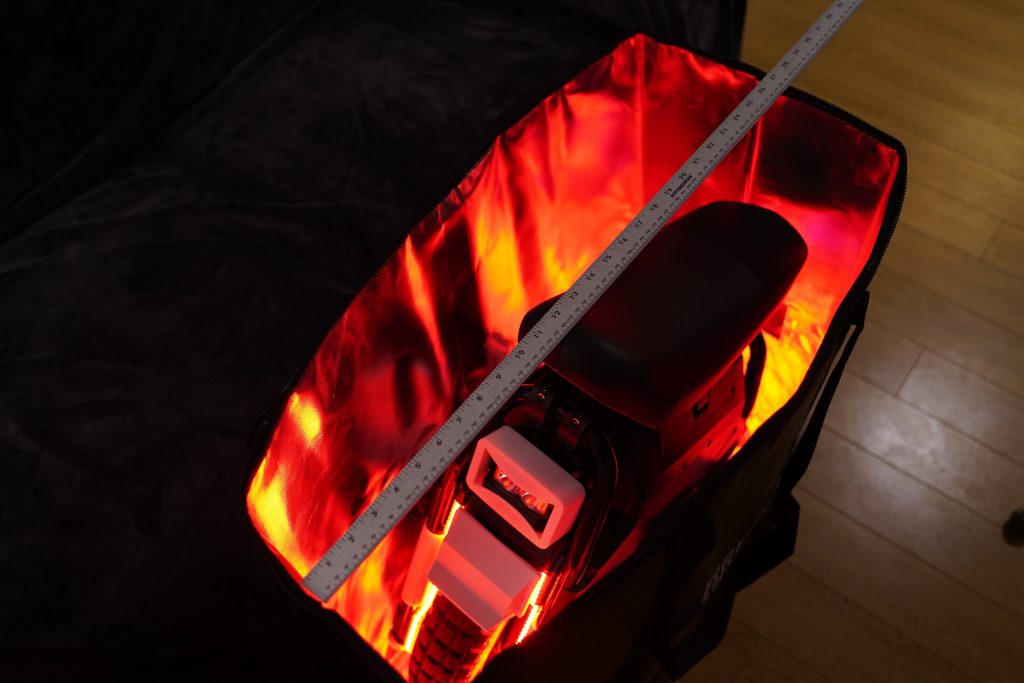
- Storage in a FireSak is better than storage right next to an office desk.
- While a FireSak might not completely stop a catastrophic battery failure – a thick fire-resistant layer between your battery and the wall might be all it takes to keep flames from spreading, or to give you those extra couple of seconds to drag it outside before it’s too late.
- Think ahead – preventative measures save lives.
- A WIFI enabled smoke alarm that will ring your phone if you’re not home, a class D fire extinguisher if you can afford it, fire blankets, FireSaks, a clear route outside if you’re not charging there already. Heck, even security cameras using ai models trained to recognize fire and dial 911 for you. It might all seem like a bit too much, but when you’re face to face with a lithium fire it won’t seem like enough.
The Tradeoff We’re Living With
Lithium batteries aren’t going anywhere. If anything, they’re becoming more central to how we live—powering transportation, tools, and even homes. The benefits are real, and for most people, the risks will never materialize into a serious incident.
But the absence of problems most of the time can create a false sense of security.
What makes lithium batteries unique isn’t that they fail often—it’s that when they do, they fail differently. The energy they store doesn’t dissipate slowly or predictably. It releases quickly, violently, and unexpectedly. That’s not a reason to avoid them, but a reminder to respect them, stay vigilant, and spread education and awareness about this technology.